
What Not to Sell at a Garage Sale: 6 Things to Check First
Check six common categories before selling secondhand: recalls, privacy, electronics, expired items, local rules and overlooked valuables.
Clearing clutter doesn’t mean everything should be offered for sale. Before setting out the tables, check these six categories to keep your garage sale safer, protect personal information and avoid accidentally underpricing something valuable.
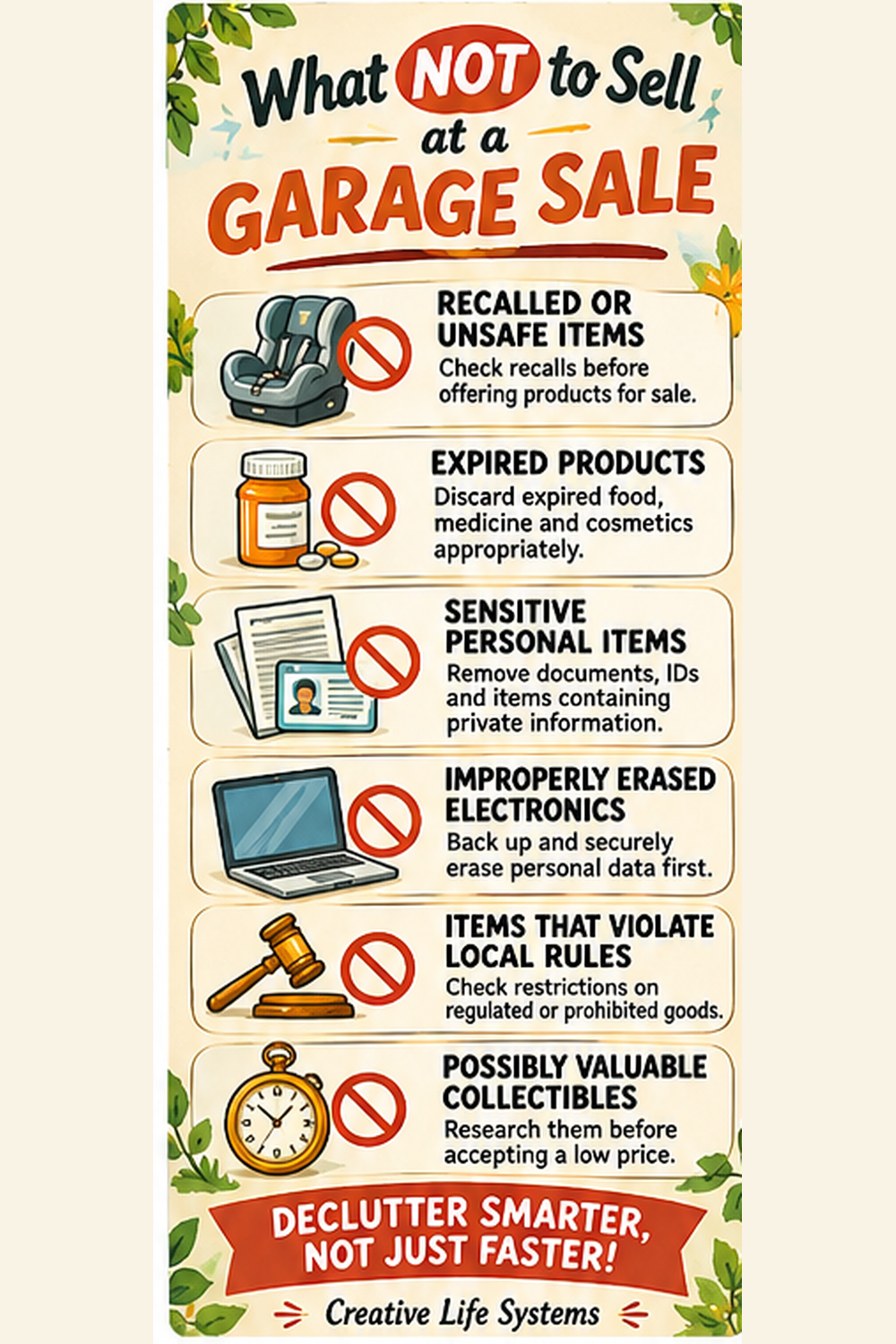
1. Recalled or unsafe items
Don’t sell a recalled product. This is especially important for children’s goods, appliances and electrical items. Look up manufacturer notices and relevant recalls in the U.S. Consumer Product Safety Commission recall database. An item being secondhand doesn’t make a known safety issue disappear.
2. Expired or questionable consumables
Keep expired medicine, food and unsuitable personal-care products off the table. Follow local guidance for medication disposal and other regulated goods. Hygiene and storage conditions matter, even when packaging looks intact.
3. Documents containing personal information
Check boxes, old notebooks, purses, wallets, desk organizers and cabinets for IDs, financial records, passwords and private correspondence. Remove and securely destroy sensitive papers instead of transferring them with an item.
4. Electronics that still contain your data
A used laptop, phone or tablet can hold accounts, photos and private files. Back up the data you need, sign out, remove activation locks where required, and follow the manufacturer’s factory-reset or secure-erasure instructions. If you can’t verify a device is ready for transfer, set it aside.
5. Items restricted by local rules
Permits, property rules and restrictions vary. Check applicable local requirements before selling anything regulated or putting signs in public areas. A garage sale doesn’t exempt you from the rules that apply to a particular type of item.
6. Collectibles you haven’t researched
Art, antiques, rare books, specialty equipment and designer goods may find a more appropriate buyer elsewhere. Compare completed sales where possible and research an item before accepting a quick, low price. If you’re unsure, keep it out of the general bargain pile.
What to do with the items you skip
- Donate: Check a charity’s acceptance guidelines before dropping off usable goods.
- Recycle: Find an appropriate program for electronics and materials, after secure data removal.
- Dispose: Follow local instructions for expired, damaged or restricted items.
- Research: Set unusual or potentially valuable objects aside for another day.
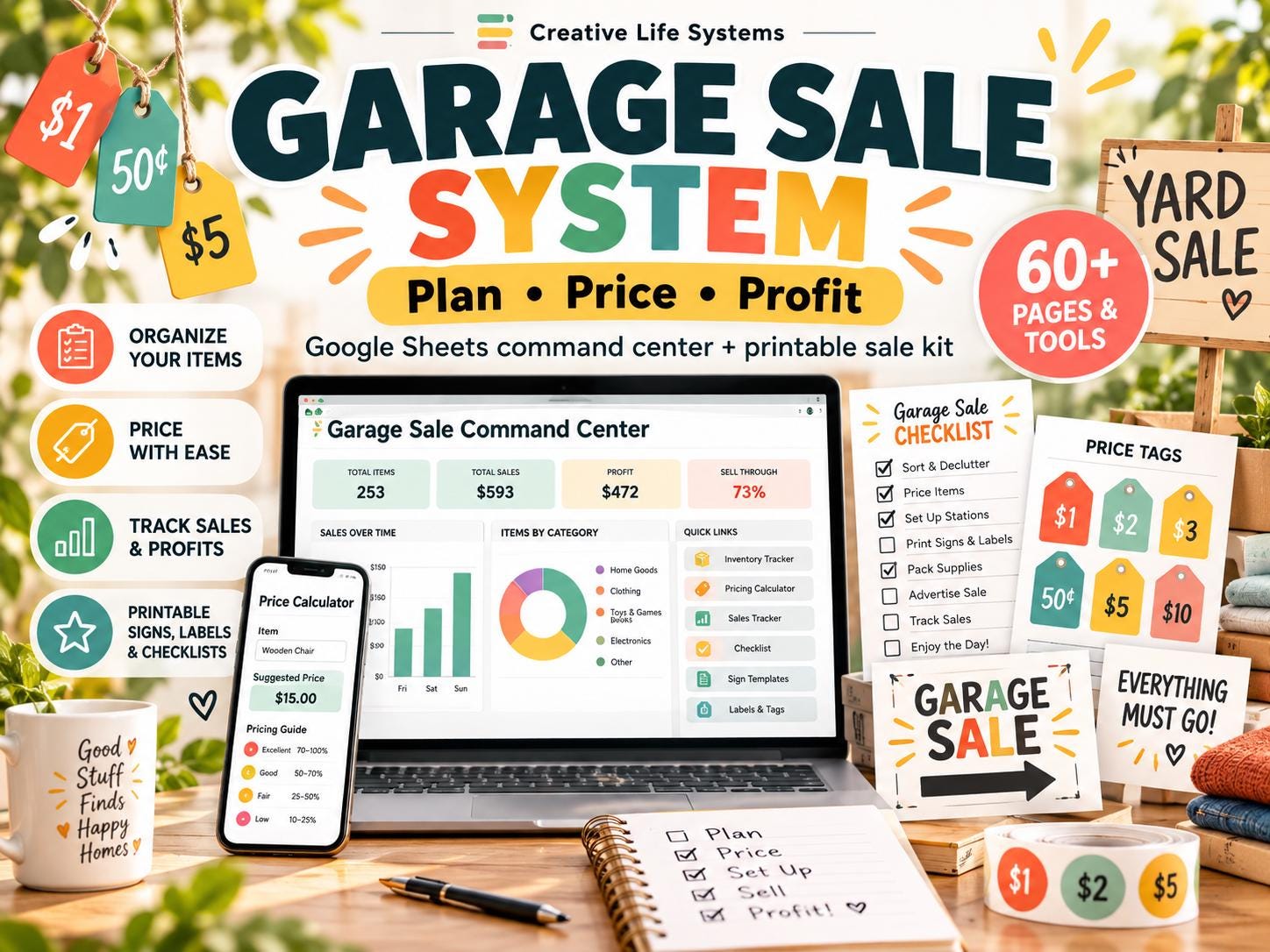
Once you’ve screened the items, you can turn the remaining pile into a manageable inventory. Start with our garage sale checklist, then use the Garage Sale System if you want to track items, sellers and sales in one place.
More garage sale planning resources
Keep going with our garage sale checklist, organization guide, pricing advice, seller safety checklist and setup ideas.
If you want inventory, shared ownership, sales, expenses and settlement in one place, explore the CLS Garage Sale System.