
Garage Sale Pricing Guide: Sell More, Guess Less
Plan realistic asking prices, label items clearly, handle negotiation and record what sells with this practical garage sale pricing guide.
This garage sale pricing guide helps you find the sweet spot between making money and making things disappear.
You’ve gathered your unwanted treasures and started attaching tags. Now you’re wondering how to price garage sale items so shoppers can see a bargain and you can feel good about the sale.
Price too high and shoppers leave. Price too low and you wonder whether you practically gave away your garage. A useful pricing plan starts with your goal: clearing space, earning money, or finding a sensible balance.
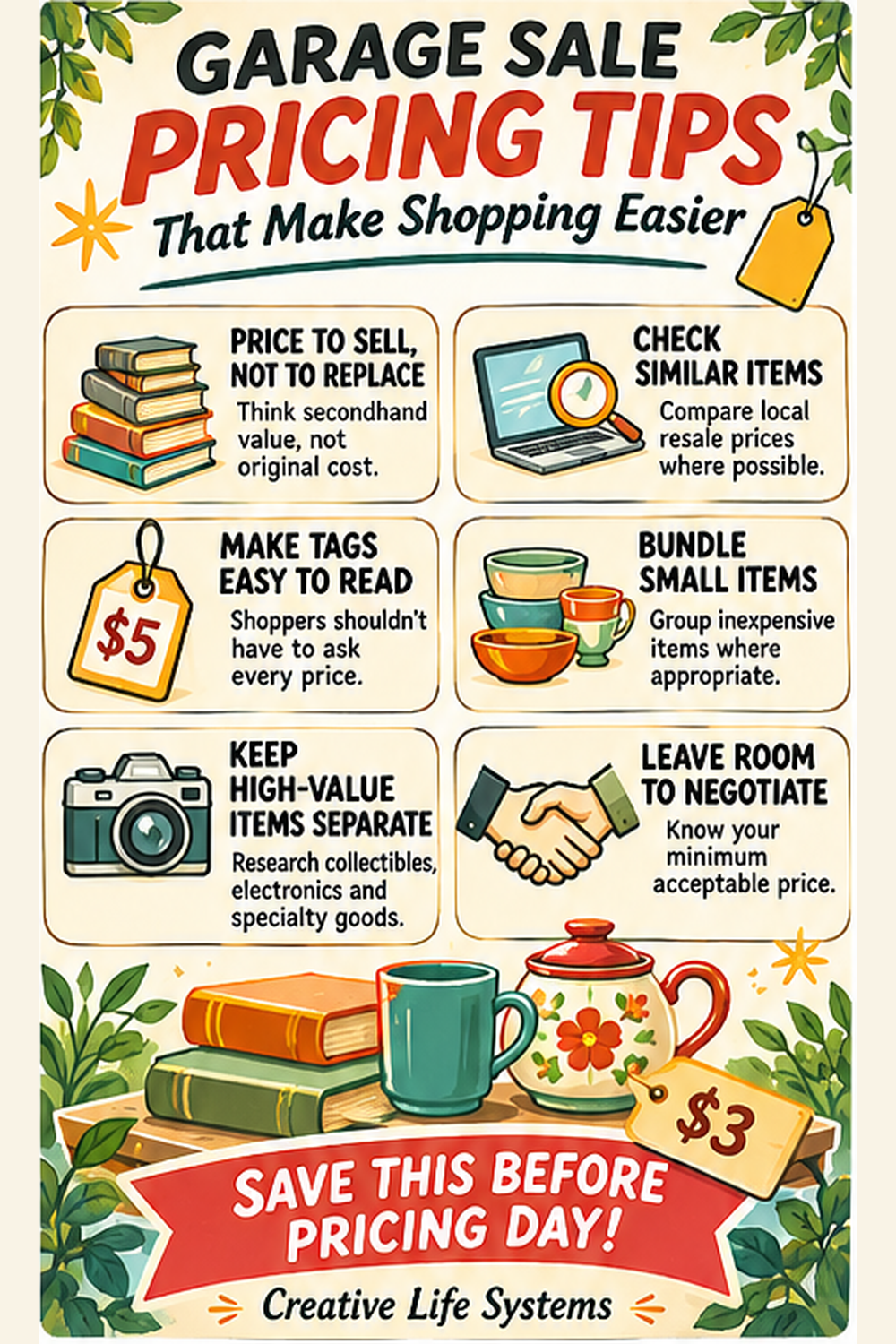
1. Remember garage sale prices aren’t retail prices
It’s tempting to remember what something cost new. But condition, age, demand and local buying habits matter more than the original tag. Research collectibles, antiques, quality electronics and designer items individually before putting them into a general bargain pile.
2. Choose garage sale pricing that is easy to understand
The following are illustrative starting ranges for ordinary used items, not appraisals or guaranteed selling prices. Adjust for condition, quality and what buyers in your area will pay:
- Paperback books: $0.50–$2.
- Hardcover books: $1–$5.
- Everyday clothing: $1–$5.
- Kitchen utensils: $0.25–$3.
- Small household decor: $1–$10.
- Children’s toys: $1–$10.
For a more valuable piece, compare similar items in similar condition. A seller’s asking price is a starting clue; completed sales, when available, are a more useful indication of what someone actually paid.
For a quick way to check comparable items, see eBay’s instructions for looking up completed listings. Match the model, condition and included accessories, and check whether the listing actually sold. Keep shipping charges separate from the item price. For garage sale pricing, use those online results as context: a local buyer taking an item home today may value it differently from someone searching nationwide for that exact model.
3. Make prices easy to see
Use readable price labels and clear signs for inexpensive groups, such as “Everything on this table $1.” Label more valuable pieces individually. When several people are selling together, keep ownership information in your inventory so a removed sticker doesn’t become a mystery at settlement time.
4. Leave a little room for negotiation
Decide which items have firm prices and which are flexible. You can price a flexible item slightly above the amount you would be happy accepting, but dramatically inflated prices may discourage shoppers.
Write down your minimum acceptable price for the items that matter. Anyone helping at the sale can then negotiate without guessing what you intended.
A simple pricing example
Imagine you are selling a clean, working lamp. You choose a $12 asking price and would be comfortable accepting $8. Those are example amounts, not a valuation for your lamp. Record both figures before the sale, along with the item’s owner.
If a shopper offers $10, your helper can accept it within the limit you agreed. Record $10 as the sale amount, rather than the $12 on the tag. This keeps your garage sale pricing plan useful when the day gets busy.
5. Bundle inexpensive items
Try several books for one clearly marked price or a small box of kitchen accessories as a set. Bundles can simplify transactions and help move related items. If a bundle contains items belonging to different sellers, agree how to divide the proceeds before the sale.
6. Decide when to lower prices
If clearing space is the goal, consider an end-of-sale discount. Set a time and a simple rule in advance, such as a discount on one table or a final bundle offer.
If you would regret parting with a valuable item cheaply, hold it for another selling channel instead. A plan for unsold items helps you make that decision without the pressure of a driveway full of boxes.
7. Track the price you actually receive
The asking price and the final selling price aren’t always the same. Record the final amount for each sold item, especially when several people own the merchandise. Keep expenses separate so you can work out your proceeds after the sale.
For the rest of your preparation, see our guide to organizing a garage sale.
Common garage sale pricing questions
Should I use a percentage of the original retail price?
A percentage can give you a rough starting point, but it won’t account for wear, missing parts, age or whether someone nearby wants the item. Check that the item is complete and usable, then compare similar pieces. A nearly new item and a worn one should not automatically have the same price because they once cost the same amount.
What should I do when I don’t know an item’s value?
Set it aside for research before sale day. Look for the brand, model and condition, then compare like-for-like examples. If it could be collectible or valuable, consider a specialist opinion or another selling channel. You can still sell the ordinary household items while you work out a fair price for that piece.
How do I handle pricing at a multi-family sale?
Give each seller a clear owner code and use it consistently on labels and in the inventory. Agree on minimum prices and discounts before shoppers arrive. For an item owned by more than one person, record the agreed split in advance so everyone understands how its final sale amount will be shared.
What should be on my pricing checklist?
- Item description and owner.
- Condition and anything included.
- Asking price and any agreed minimum.
- Whether a bundle or later discount is allowed.
- Final sale amount, recorded when the item sells.
A small amount of preparation makes it easier to answer shoppers’ questions, negotiate consistently and settle up with the people who helped.
Keep your pricing plan in one place
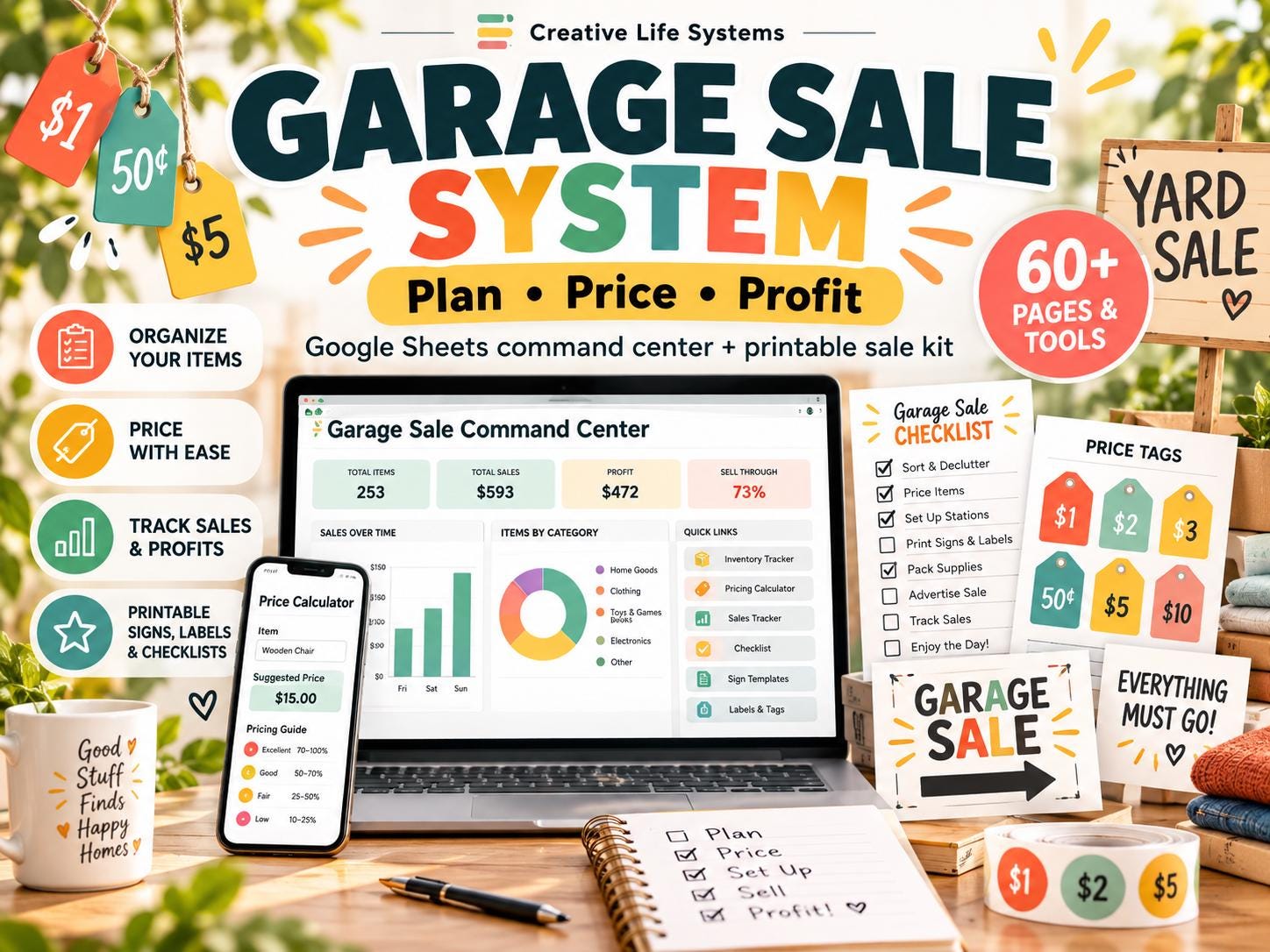
The Creative Life Systems Garage Sale System brings inventory, sale planning, individual owners and shared-item groups, sales, expenses and settlement together. Printable signs and price labels support the sale-day setup.
Explore the Garage Sale System and choose the tools that fit your next sale.
Explore the Garage Sale Planning Collection
Plan with the beginner checklist, review items to check before selling, discover setup ideas and keep the practical steps together with the CLS Garage Sale System.