
The Ultimate Garage Sale Checklist for Beginners
A practical garage sale checklist for before the sale, setup, sale day and cleanup, with a simple timeline and reminders.
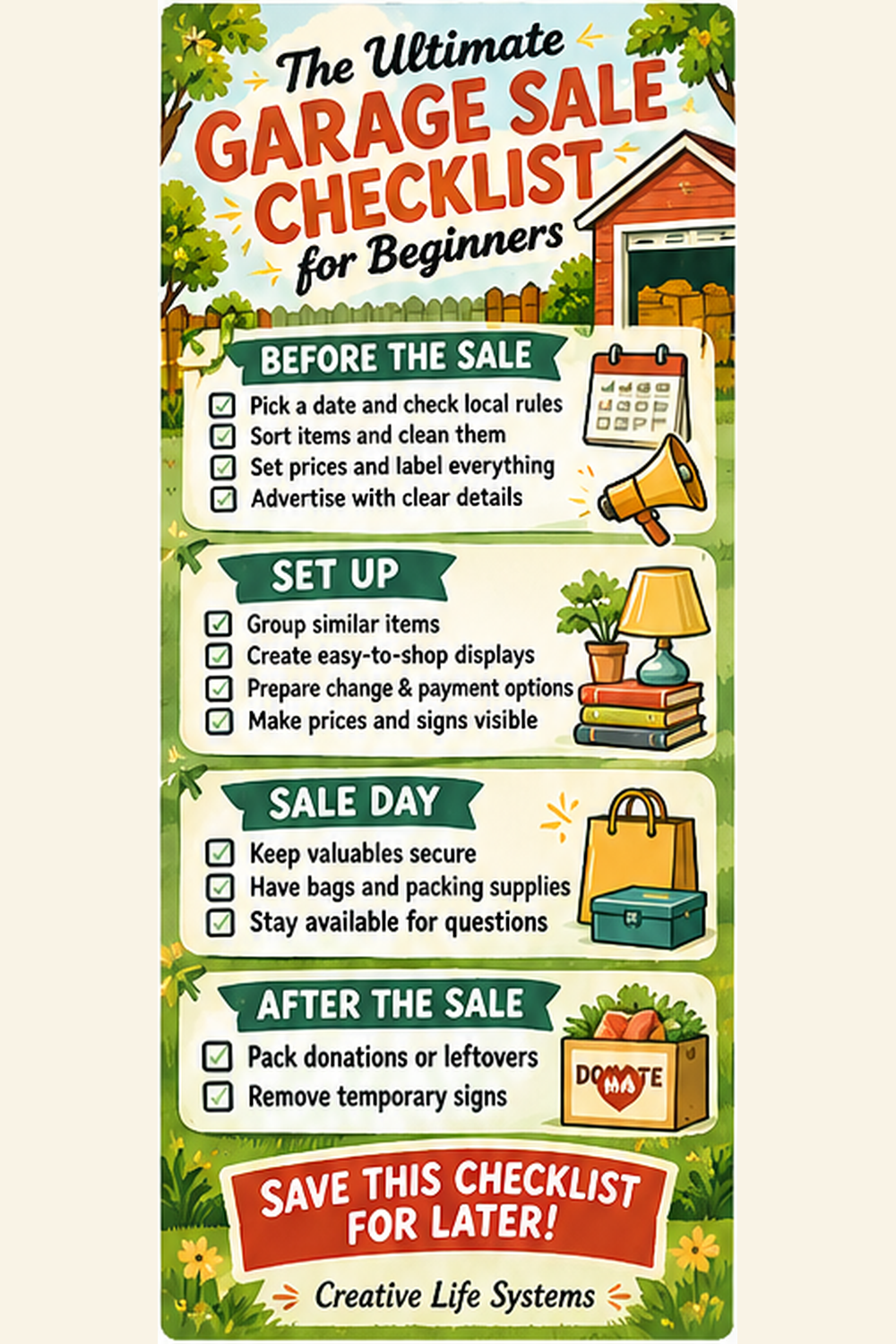
A garage sale is easier to run when you plan it in stages. This beginner garage sale checklist covers the decisions that matter from the first room sweep to the last donation box. The goal is simple: make shopping easy and keep your money and inventory organized.
Two weeks before the garage sale
- Choose the date, hours and a weather backup plan. Check local and neighborhood rules for sales and signs.
- Sort household items into sell, keep, donate and research piles.
- Clean and test appropriate items; check applicable product recalls before putting goods up for sale.
- Give each item a basic inventory record: description, condition, owner and intended price.
- For a shared sale, agree how labels, negotiations and proceeds will work.
Don’t rush to price specialty electronics, designer items or collectibles you haven’t researched. Hold those in a separate box.
One week before the sale
- Research realistic secondhand prices. A price that worked in another city or season may not suit your sale.
- Write readable tags; label bundles clearly and mark each item’s owner if several people are selling.
- Gather racks, tables, boxes, signs, shopping bags, payment supplies and change.
- Write an accurate advertisement with the date, hours, general categories and address. Follow local posting rules.
- Decide which discounts and offers are acceptable before shoppers arrive.
For examples and common questions, see our garage sale pricing guide.
The day before: make the space easy to shop
- Group clothes, books, kitchenware, toys and garden items in clearly defined areas.
- Keep walking routes, driveways and exits clear. Avoid loose cords and unstable stacks.
- Put price signs where they can be read without moving everything on the table.
- Prepare a checkout area with bags, change and a reliable way to record sales.
- Keep fragile, valuable and personal items supervised and out of reach of unnecessary handling.
Our garage sale setup ideas show seven ways to arrange the space.
Sale day: your quick checklist
- Check that directional signs are allowed and display the correct hours.
- Make a final safety check of tables, walkways and merchandise.
- Keep payments and change in one supervised place.
- Record what actually sells, including the final price and owner.
- Apply negotiated discounts consistently and protect sellers’ agreed minimums.
After the sale
- Take down temporary signs and tidy the area.
- Set aside usable leftovers for donation, another sale or storage.
- Dispose of items safely when they aren’t suitable for resale.
- Reconcile payments, subtract expenses and settle shared sale proceeds using your item records.
Prefer one organized planning system?
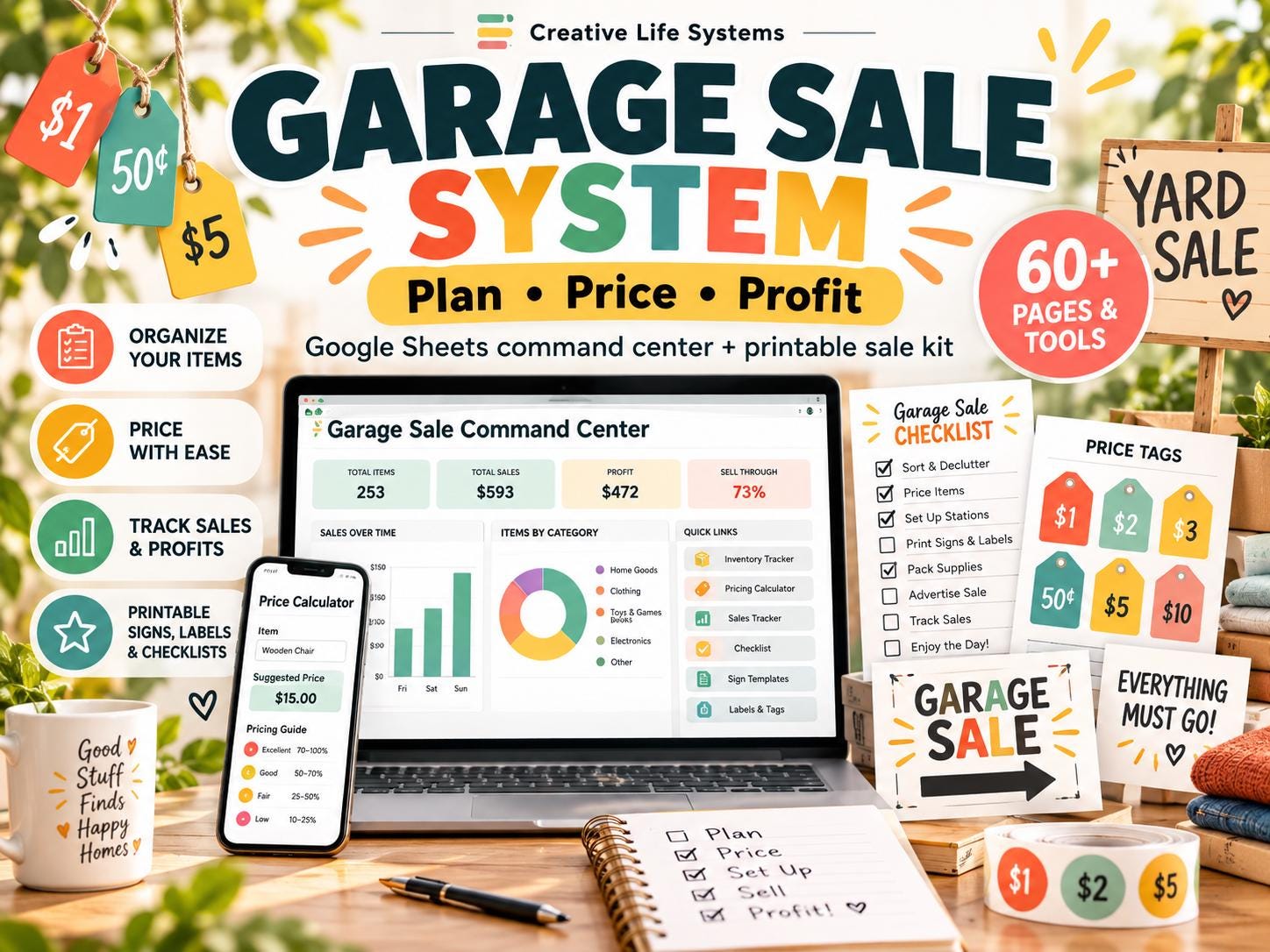
You can run the entire sale with paper and pen, but the Creative Life Systems Garage Sale System helps track inventory, individual and shared owners, sale expenses, transactions and owner settlement alongside printable planning and signage tools.
More garage sale planning resources
Keep going with our garage sale checklist, organization guide, pricing advice, seller safety checklist and setup ideas.
If you want inventory, shared ownership, sales, expenses and settlement in one place, explore the CLS Garage Sale System.