
How to organize a garage sale without losing track of the details
A practical garage sale plan starts before the first price sticker. Give every item, owner, and dollar a place in the system.
Start with the items, not the tables.
Pick a date, then walk through the rooms and storage areas you want to clear. Make one inventory as you go. Record the item, who owns it, and the asking price. If you are selling with another household, agree on ownership before the sale gets busy.
Make pricing a decision you can finish early.
Set an asking price and a minimum you would accept. Price similar items consistently, and make labels easy to read. For a shared item, decide how you will divide the proceeds. That small conversation is much easier before someone offers you cash at the driveway.
Give shoppers a clear route.
Group similar items and use simple category signs. Place small items where they are easy to see, and leave room to move between tables. Keep packaging and bags nearby. A sale that is easy to shop is also easier for you to manage.
Record the sale while it happens.
Mark the item sold and record the amount you actually received. Keep sale expenses in the same record, including supplies or advertising. At the end, compare your records with the money collected. If more than one person is involved, work from those records when settling each share.
Plan the last hour before the first hour.
Decide what happens to unsold items: keep, donate, list elsewhere, or dispose of them appropriately. Arrange the donation or pickup step in advance where practical. The sale is finished when the money is settled and the leftovers have a destination.
Use a system that follows the whole sale.
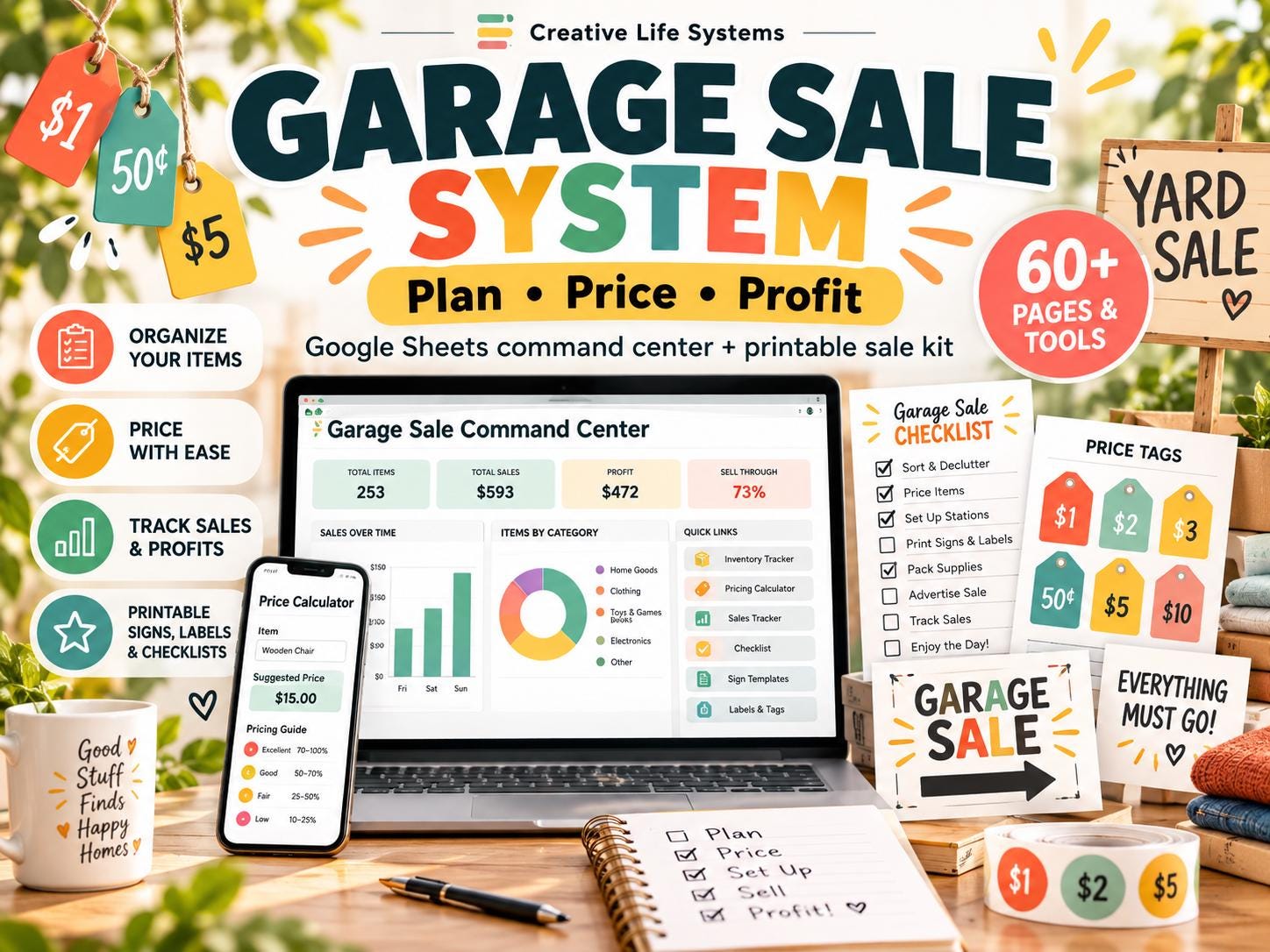
The CLS Garage Sale System brings inventory, shared ownership, sale planning, money tracking, and printable sale-day tools together. It gives those decisions a consistent home from the first room sweep through the final payout.
10 things to do before a garage sale
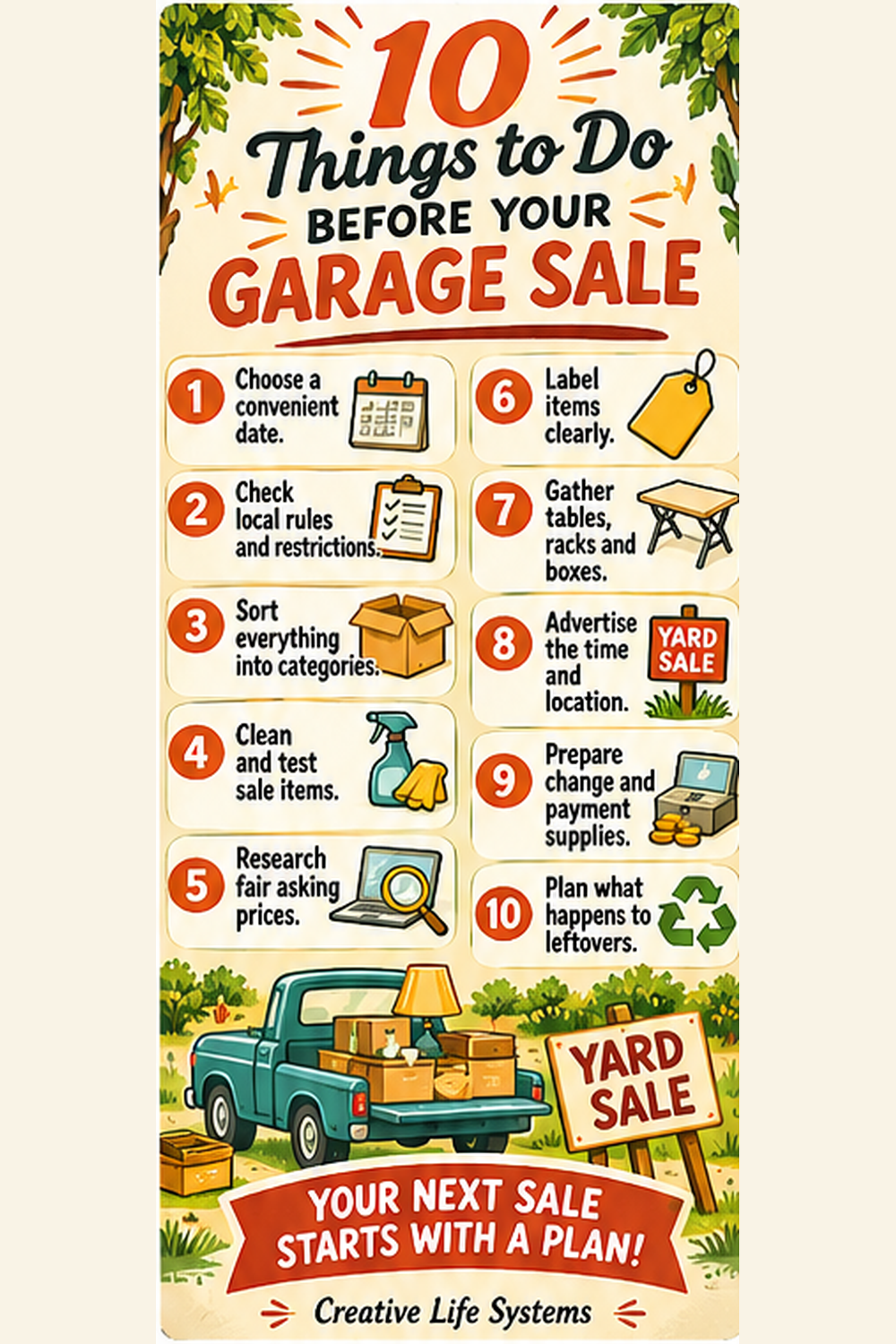
- Choose a convenient date and hours.
- Check neighborhood and local rules for sales and signs.
- Sort items into clear categories.
- Clean and test usable merchandise.
- Research reasonable secondhand prices.
- Label items with visible prices and seller codes when needed.
- Gather stable tables, clothing racks and bags.
- Advertise with accurate dates, location and highlights.
- Prepare change, payment supplies and a sales log.
- Decide what will happen to unsold items.
For a step-by-step timeline, see the Ultimate Garage Sale Checklist for Beginners.
Explore the Garage Sale Planning Collection
Plan with the beginner checklist, review items to check before selling, discover setup ideas and keep the practical steps together with the CLS Garage Sale System.