
How to Plan Christmas Elf Ideas Without a Nightly Scramble
Choose easy Christmas elf ideas, gather one week of supplies and keep a few backup setups ready for busy evenings.
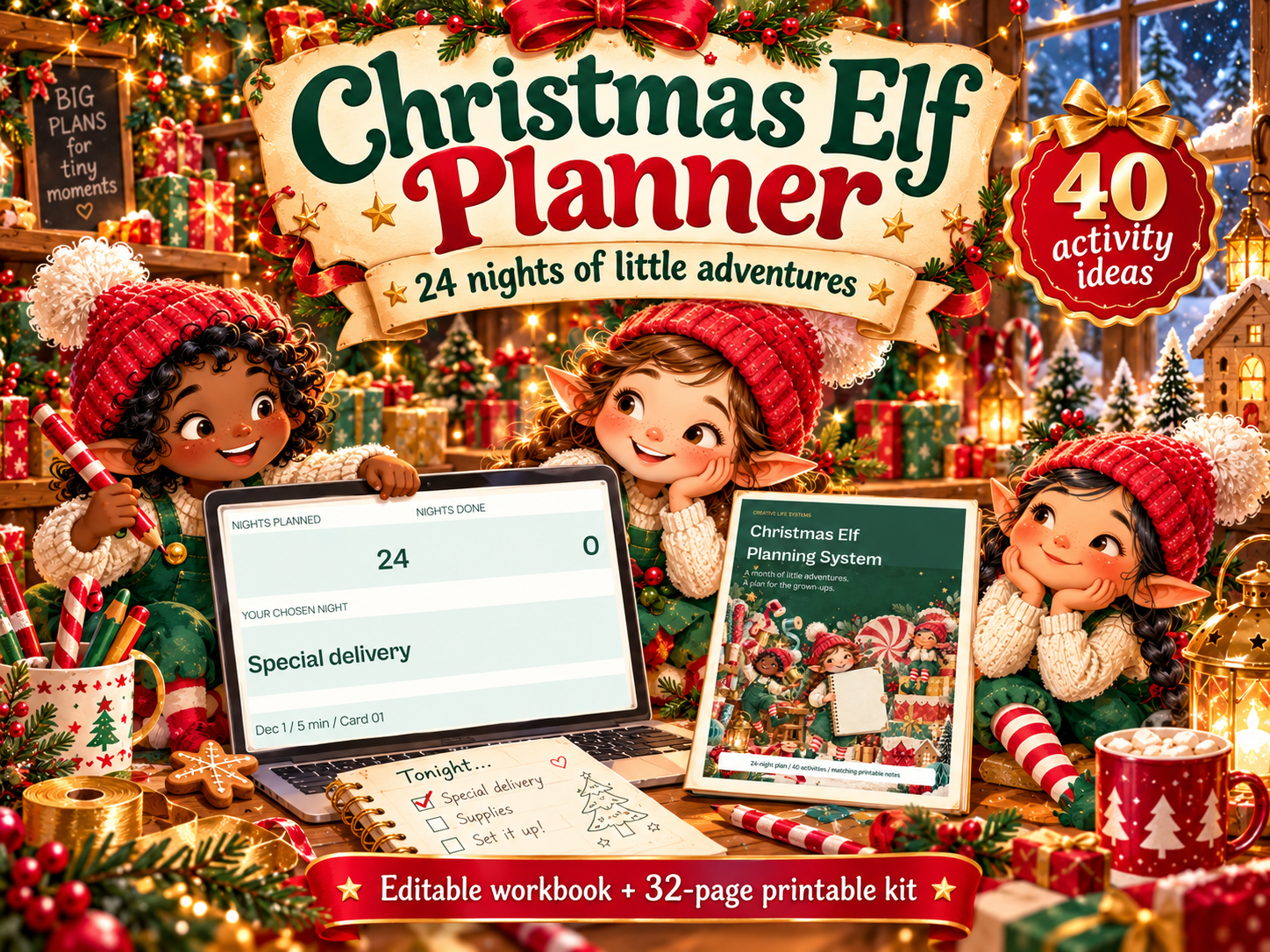
Planning Christmas elf ideas can be delightful. The nightly question of what to do next can become less delightful when you remember it just before bed. A practical plan gives you a few easy choices and lets you enjoy the tradition without turning every evening into a craft project.
Start with the kind of December your family actually has. Choose simple setups for busy days, keep supplies together, and leave room to change your mind. The aim is a little shared fun that fits your household.
Choose how many nights you want
There is no prize for planning the most elaborate month. Decide when your little visitor arrives and when the visit ends. Some families enjoy a full 24-night countdown. Others prefer a shorter visit or a few special appearances.
Write those dates down first. Add any travel, late work evenings, school events or other commitments that will make setup difficult. Those are good nights for a very small idea. If you are planning a shorter visit, put your goodbye activity on the final night rather than leaving it stranded at the end of a longer schedule.
Give busy nights an easy job
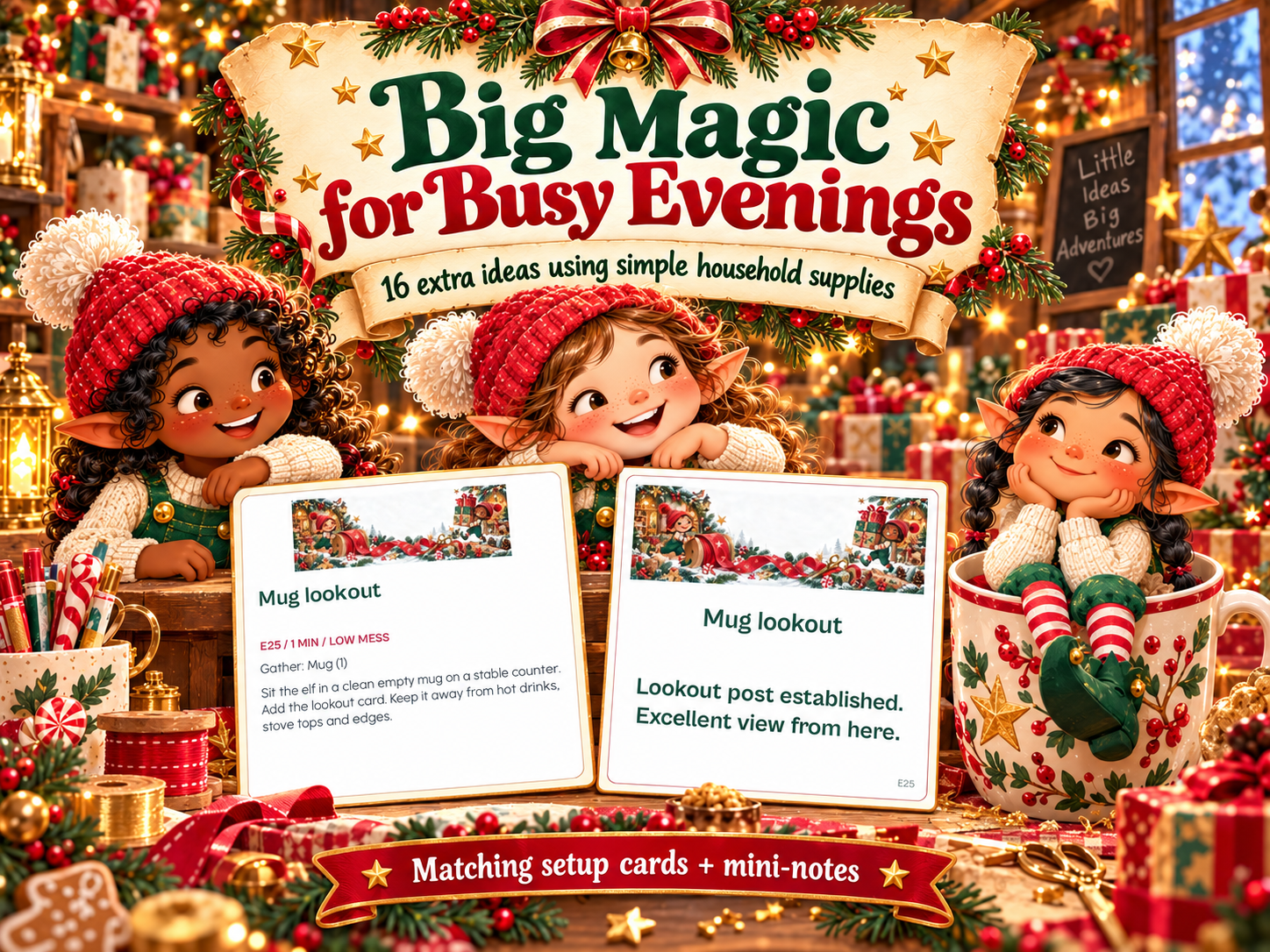
Think in terms of available time. A clean, empty mug can become a lookout post in about a minute. A sock can become a sleeping bag in a couple of minutes. A picture book and a few familiar toys can make a story circle.
Save cutting, drawing or more detailed construction for evenings when someone has time to enjoy it. Estimated setup times are a planning aid, not a test. Printing, finding a missing item or helping a child join in can take longer.
If you like variety, rotate between a few types of activity: a silly scene, a reading invitation, a small creative task and a kindness message. Variety can come from the idea rather than from buying a new prop every night.
Plan seven nights before gathering supplies
Pick the next seven ideas and read their instructions before making a shopping list. Note what each setup needs, then check cupboards, stationery drawers and the toy basket. Many simple scenes can use a clean sock, an empty box, paper, crayons or a familiar book.
Separate reusable props from things you will use up. A mug can return for another scene later in the month. Paper used for a card or a paper chain will need replacing. For reusable items, plan the largest set needed on one night. For consumables, add up the amounts across the activities you have chosen.
Put the supplies in a small basket with the printed notes for that week. Keep the basket somewhere the grown-ups can find it. You do not need to build every scene in advance to benefit from having the ingredients together.
Keep the note connected to the activity
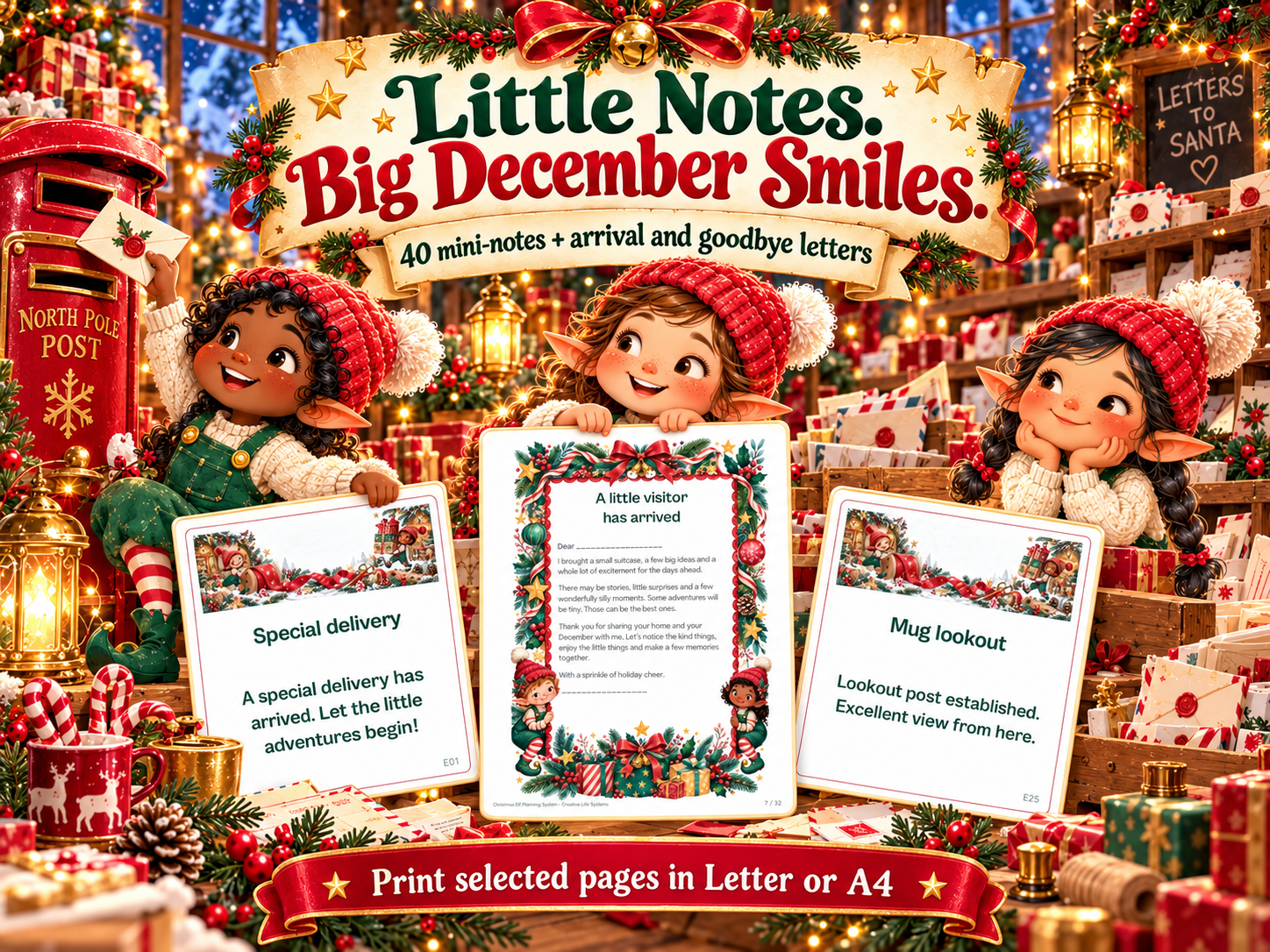
Printing every page at once is optional. It can be easier to print only the next week’s notes and setup instructions. Labeling ideas and cards with the same ID helps prevent a late-night search through a stack of paper.
For example, the Mug lookout activity in the CLS system is E25. Its setup card explains the scene and its mini-note supplies the message. The Printable Guide lists the pages for both. Choose Letter or A4 to match your paper, then use your printer’s Actual size or 100% setting.
Keep the grown-up instructions separate from the note that goes into the display. One explains how to create the scene; the other is part of the little visitor’s story.
Choose a backup before you need it
Give yourself two or three ideas that need almost no preparation. An elf beside an upside-down picture book, tucked into a clean sock or sitting in an empty mug can all make a small scene. Pick the alternatives that suit the objects and space you already have.
If a setup feels awkward, skip it or swap it. A paper drawing can replace loose materials. A scene on a stable shelf can replace something that would clutter a walking route. Choose age-appropriate objects and let an adult handle cutting and setup.
It also helps to decide who is on duty. A name beside each night is more useful than assuming someone else will remember. The planner records the routine; any automatic reminder needs to be set separately in your own calendar or reminder app.
Save the ideas your family enjoyed
After a scene, note what worked. Was the setup genuinely quick? Did everyone enjoy the message? Was an item difficult to find? A short note and an optional photo link can help you choose next year’s favorites.
Keep the year’s completed workbook as an archive. Start a fresh copy for the next holiday season so you can change the dates without losing the old plan or mixing last year’s notes with new activities.
A simple weekly checklist
- Choose the next seven activities.
- Put the easiest ideas on the busiest evenings.
- Check supplies you already own.
- Print the matching notes and instructions.
- Assign the grown-up on duty.
- Keep one quick rescue idea ready.
The Creative Life Systems Christmas Elf Planning System brings those steps together in an editable workbook and matching printables. It includes a prepared 24-night plan, 40 activity ideas, a connected supply list, setup cards, mini-notes and arrival and goodbye letters. You can keep the prepared plan or adjust it to your family’s December.
Christmas elf planning questions
Do I have to plan all 24 nights?
No. Choose an arrival date and a visit length that suit your family. A shorter visit or a few special appearances can work, too.
What can I do when I forget a night?
Choose a backup that uses something already at home, such as an empty mug, a clean sock or a picture book. Swap or skip the activity in your plan.
Can I print only the notes I need?
Yes. Use the Printable Guide to find the matching pages, choose Letter or A4, and print the selected pages at Actual size / 100%.
The little moments are the point. A workable plan simply makes them easier to enjoy.
For the rest of December, the Christmas Planning System helps you bring the wider holiday plan together. You can also browse the CLS template catalog.