
How to Host a Book Club That Gets Everyone Talking
Plan a relaxed book club with useful questions, a simple agenda, and room for different perspectives.
You have picked a book. Everyone has a place to sit. There might even be something good in the snack bowl. Then someone asks, “So, what did you think?” and the room goes quiet.
A good book club does not need a perfect host or a room full of literary experts. It needs a little structure, a few questions that invite more than a yes or no, and permission for readers to see things differently. Here is a practical way to plan your next gathering.
Choose a book people can actually get
Before announcing the next title, check the length, reading time, price, and available formats. A popular library title can have a long hold list. Some members may prefer audio, large print, or an ebook. A book everyone can access is a better starting point than a choice that leaves half the group waiting.
Invite a few nominations rather than an endless list. Ask each person to share the title, author, and a short reason it interests them. Agree on a simple voting method and how you will resolve a tie. Confirm the choice and next meeting date in one message.
Give the invitation the details that matter
Include the book, date, start and finish times, location or meeting link, host contact, and RSVP request. Let guests know whether they should bring anything. Ask privately about dietary and access needs instead of making assumptions.
It also helps to explain the spoiler plan. Will you discuss the ending? Can unfinished readers join the opening round? There is no single correct rule, but a clear agreement prevents an awkward surprise.
Prepare four to six questions
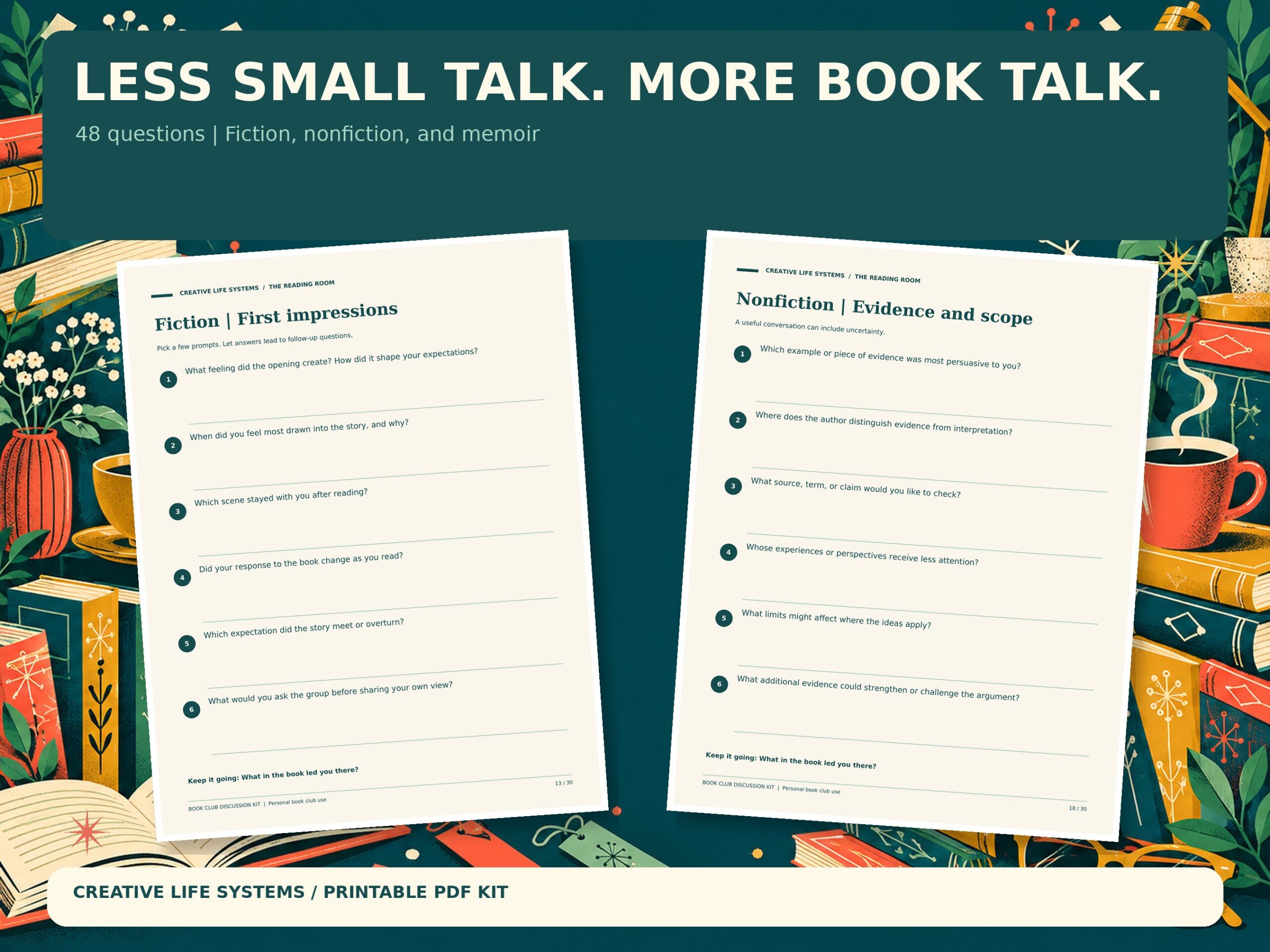
You do not need a long script. Choose an opening question, a few deeper prompts, and a closing reflection. For fiction, you might ask which choice was hardest to understand, how the setting shaped the story, or whether the ending felt earned. For nonfiction, try the central idea, the most persuasive example, and a claim the group would like to explore further.
Choose questions that fit the book. A plot question will not help much with an essay collection, and an argument about evidence may feel out of place in a fantasy novel. Use a prompt as a doorway into the conversation, then follow what readers notice.
Try a relaxed one-hour agenda
- First 10 minutes: Welcome everyone, settle in, and confirm spoilers.
- Next 10 minutes: Share first impressions. A three-word reaction can be easier than a formal review.
- Next 25 minutes: Explore a few discussion questions. Ask which moments in the text shaped each view.
- Next 10 minutes: Make a connection or share an idea worth remembering.
- Final five minutes: Confirm the next book, host, and date.
Treat the agenda as a guide. If the group finds a question worth staying with, you can skip another one. The purpose is a satisfying conversation, not completing a worksheet.
Make room for different voices
Some readers think aloud. Others need a pause. Leave a little silence after asking a question, and invite other views without requiring everyone to speak. “What did someone else notice?” is often more welcoming than putting one quiet person on the spot.
If one voice is taking most of the time, gently open the room: “Let us hear a few other reactions.” If opinions clash, return to the book: “Which scene led you to that reading?” Discuss an idea or a writing choice without judging the person who responded to it.
Personal connections can be meaningful, but sharing should always be optional. No one owes the group a private story to explain their reaction.
Add one small bookish activity
When the group wants a change of pace, try a six-word review, imagine a different cover, or suggest another book that would make an interesting companion. These work without extra shopping or elaborate decorations.
A conversation card can help too. Let someone choose a question rather than drawing at random if that feels more comfortable. Passing is fine, and a question that does not fit the book can simply go back in the stack.
Keep the preparation you will use again
Save the meeting plan, a few reader notes, and a record of the books you have read together. You do not need to archive every opinion. A single takeaway can be enough to remind you why a conversation mattered.
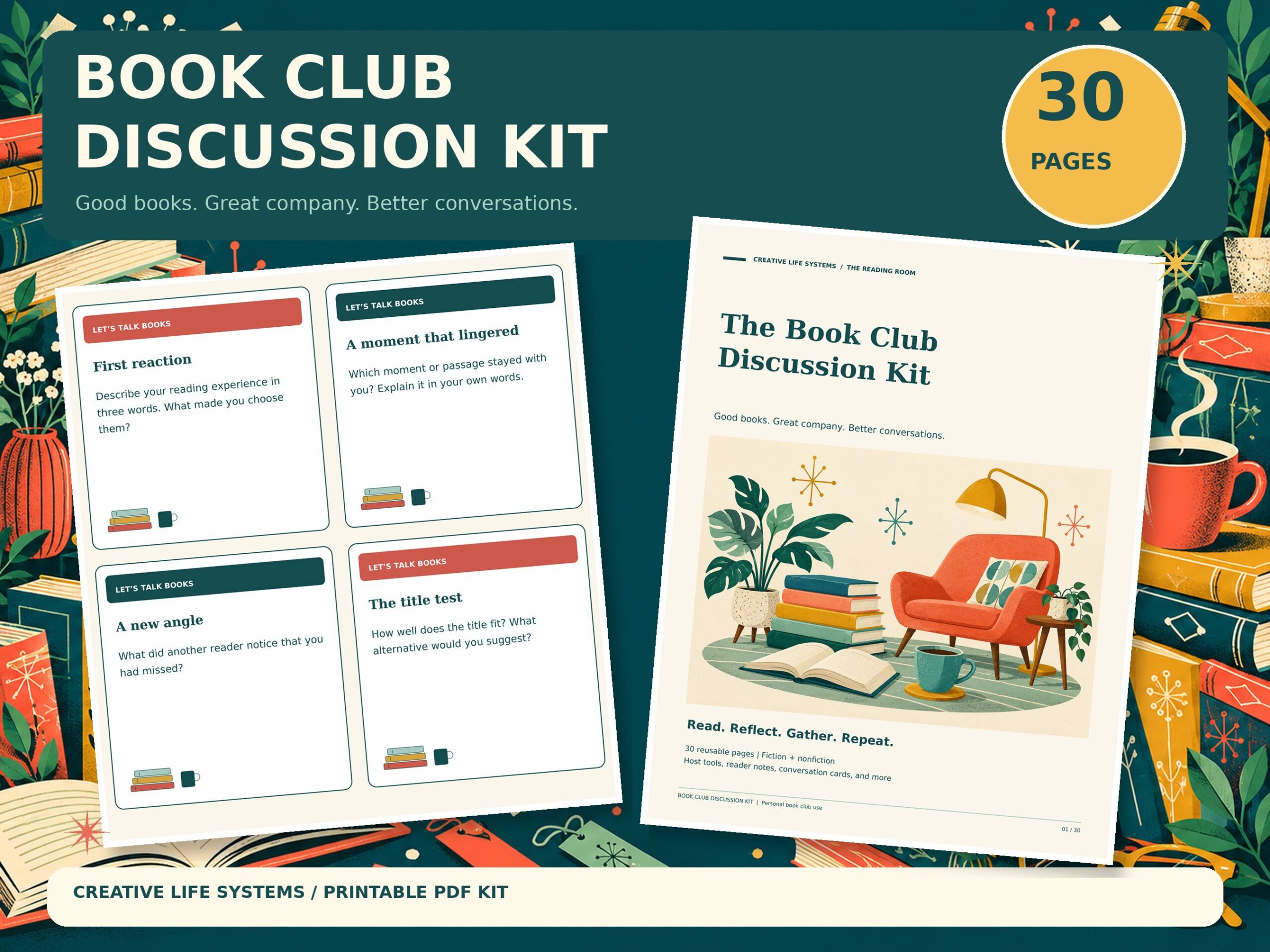
The Creative Life Systems Book Club Discussion Kit brings these pieces together in a coordinated retro printable collection: host tools, reader worksheets, 48 fiction and nonfiction questions, 16 conversation cards, book voting pages, an invitation, and bookmarks. It includes the same 30 pages in US Letter and A4, with color and ink-saver editions.
Print the pages your group needs and leave the rest for another gathering. A little preparation should make it easier to enjoy the company and the book.
Explore the $7.99 Book Club Discussion Kit on Etsy. Digital printable PDFs; no physical item or books included.